
Adhesive Backed Materials Ltd
Elastomer & Polymer Sheet Range (Rubbers)



Material Properties & Benefits
We convert a comprehensive range of elastomer and polymer sheet materials into precision-engineered components including die cut rubber gaskets, seals and washers for a wide variety of industries. Our range spans multiple material types, each selected to perform reliably in demanding environments — from extreme temperatures and aggressive chemicals to potable water systems and food-contact applications.
Below you will find details on each material type, the products we can produce from it, and how we process these materials in our facility.
High Friction Polymer (HFPM)
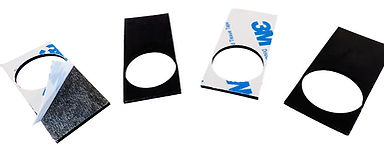
Our High Friction Polymer (HFPM) is a 0.8mm flexible sheet material manufactured from a blend of specialty polymers encapsulating a viscose non-woven core. It is designed specifically to deliver a high coefficient of friction on both surfaces, providing reliable grip between mating components without the need for adhesive or fixings. The material is available in blue, black, red, yellow, green, and white, which aids colour-coding and product identification. It is available as both sheet and roll stock.
EPDM (Ethylene Propylene Diene Monomer)
EPDM is a synthetic rubber known for its outstanding resistance to weathering, ozone, and UV exposure, making it one of the most widely used sealing materials for outdoor and exposed applications. Our EPDM range is available in several grades spanning 60 to 70 Shore A hardness, with a working temperature range of -30°C to +130°C (down to -40°C in selected grades). All grades are 100% EPDM polymer compound and offer excellent resistance to dilute and concentrated acids and alkalis. EPDM maintains a reliable compression set over time, ensuring gaskets and seals remain effective in service.
Specialist grades within the range extend the material's capabilities further:
-
WRAS Approved Grade — approved for contact with potable (drinking) water, making it suitable for plumbing and water treatment applications.
-
Metal Detectable Blue FDA Grade — formulated with FDA 21 CFR 177.2600 and EU 1935/2004 food-contact compliance, with metal detectability built in — an essential safety requirement in food and pharmaceutical manufacturing environments.
-
UL94 V-0 Flame Retardant Grade — meets the UL94 V-0 flammability classification and carries anti-static characteristics, suitable for electrical, rail, and other fire-critical applications.
Neoprene (Polychloroprene)
Neoprene is a versatile synthetic rubber offering a good balance of mechanical performance, chemical resistance, and weather durability. Our Neoprene range covers hardness grades from 50 to 80 Shore A, providing flexibility to match the precise stiffness required for any application. The working temperature range is -30°C to +120°C, with good low-temperature performance confirmed at -40°C in harder grades.
Neoprene demonstrates good resistance to ozone and UV, and performs well in contact with mineral oils (paraffinic and naphthenic), animal and vegetable oils, dilute acids, and alkalis. It also resists fuel (up to defined swell limits), making it appropriate for many automotive and marine environments. Neoprene’s strong tensile strength and tear resistance allow it to handle demanding mechanical duty.
Our UL94 V-0 Flame Retardant Neoprene grade extends the range into fire-critical applications. This grade passes the UL94 V-0 flammability test and meets the French NF F16-101 M2 fire classification with F3 smoke density and toxicity ratings — relevant to rail and public transport sectors.
Nitrile Rubber (NBR)
Nitrile rubber is one of the most widely specified elastomers where resistance to mineral oils, petroleum, and hydraulic fluids is required. Our range covers five hardness grades from 40 to 80 Shore A, giving considerable scope to match the mechanical requirements of each application. Softer grades (40–50 Shore) offer higher elongation and compliance; harder grades (70–80 Shore) provide greater tear resistance and dimensional stability under load.
The working temperature range is -30°C to +120°C across most of the range, with harder grades rated from -20°C or -15°C at the low end. Volume swell in standard ASTM reference oils is very low — nitrile tends to show minimal or slightly negative swell in lighter oils, demonstrating strong oil resistance. All grades are 100% nitrile polymer compound and are tested to BS 903 standards. Good resistance to dilute acids and alkalis is a further benefit; concentrated acids and solvents are not recommended.
Butyl Rubber (IIR)
Butyl rubber is characterised by its exceptional resistance to ozone, oxidising acids, and alkalis — both dilute and concentrated. It has a very low gas permeability compared to most elastomers, making it valuable wherever an airtight or chemical-resistant barrier is required. Our grade is 65 Shore A hardness with a working temperature range of -40°C to +125°C, offering reliable performance in both low-temperature and elevated-temperature environments. Heat ageing stability is good, with minimal change in hardness, tensile strength, or elongation after exposure to elevated temperature.
Viton A Fluoroelastomer (FKM)
Viton A is a fluoroelastomer (FKM) offering the broadest chemical and thermal resistance in our rubber range. It maintains its properties across an operating temperature range of -20°C to +275°C — considerably higher than any other elastomer we stock — and retains performance in contact with oils, fuels, solvents, dilute and concentrated acids, and alkalis. Ozone resistance is excellent. The grade is 75 Shore A hardness and carries an anti-static characteristic. The high fluorine content of Viton gives it a high specific gravity (2.00 g/cm³) relative to other rubbers. It is specified in applications where other elastomers cannot withstand the chemical or thermal conditions required.
Hypalon (CSM — Chlorosulfonated Polyethylene)
Hypalon is a high-performance synthetic rubber offering excellent resistance to ozone, UV, and weathering, combined with a notably higher upper temperature limit than EPDM or Neoprene. Our grade operates across a range of -30°C to +180°C, making it one of the most thermally capable rubbers in this range. It offers excellent resistance to dilute acids and alkalis, good resistance to concentrated acids and alkalis, and good performance against oils — a combination that makes Hypalon suitable for aggressive chemical service environments. The hardness is 65 Shore A.
Natural Rubber (NR)
Our natural rubber range is supplied to BS1154 Z50 and Z60 grades, offering 50 and 60 Shore A hardness respectively. Natural rubber is noted for its high tensile strength (up to 170 kg/cm²), excellent elongation at break (400–500%), good tear resistance, and good abrasion resistance — properties that make it well-suited to demanding mechanical and engineering applications. The working temperature range is -20°C to +70°C. Natural rubber does not perform well in contact with oils, solvents, or fuels, and is susceptible to ozone degradation over time, so it is best suited to indoor or enclosed environments where these exposures are not a concern.
Silicone Rubber
Silicone rubber offers the widest thermal operating range of any material in our range, performing reliably from -60°C to +230°C in continuous service, with intermittent peaks to +250°C. This makes it the material of choice when temperature extremes — whether low or high — rule out other rubber types. Our general-purpose silicone range spans Shore A hardnesses from 20 to 80, covering applications from very soft, compliant seals through to firm engineering components.
Silicone is inherently resistant to ozone, UV, oxidation, weathering, cosmic radiation, and corona discharge — properties that make it suitable for long-term outdoor and electrical applications without degradation. It has excellent electrical insulation characteristics, including high dielectric strength and very high volume resistivity. The range carries multiple approvals and certifications including FDA 21 CFR 177.2600 (food contact), EU Directive 1935/2004, WRAS (for grades up to 85°C in potable water contact), aviation flammability standards FAR/JAR/CS 25, REACH, and RoHS.
Within our silicone range we also stock BISCO® HT-6240, a specialist transparent solid silicone at 40 Shore A. Available in thicknesses from 0.25mm to 3.18mm and supplied in roll form, it is optionally available with an acrylic or silicone pressure-sensitive adhesive pre-applied (from 0.79mm thickness). Its optical clarity makes it valuable in applications where visual inspection through the component is required.
PVC (Polyvinyl Chloride)
Our PVC range comprises two flexible sheet grades suited to different application requirements. The standard black flexible PVC grade (77 Shore A) is a cost-effective material offering good flexibility, a light transmission above 80%, and useful airborne sound insulation of approximately 30 dB. It remains flexible down to -35°C and has a working temperature range of -15°C to +50°C. It is self-extinguishing and meets US MVSS 302 flammability requirements.
The clear flame retardant PVC grade is a 2mm transparent sheet classified to DIN 4102 B2 (self-extinguishing), with good tensile strength and elongation in both crosswise and lengthways directions. Its clarity makes it suitable where visibility through the component is needed, while the flame retardant formulation is appropriate for fire-sensitive environments. Both grades are supplied in sheet and roll form.
Typical applications
Converting these materials allows us to produce a wide range of industrial components. Typical products include:
High Friction Polymer
-
Anti-slip pads for equipment feet, machine bases, and flooring products
-
Grip pads between stacked or transported goods to prevent movement
-
Interleaving and cushioning layers in packaging
-
Friction liners within clamps, brackets, and mechanical assemblies
EPDM (Ethylene Propylene Diene Monomer)
EPDM’s weather and chemical resistance makes it a go-to material for seals, gaskets, and protective components across a broad range of sectors. Typical products we produce from EPDM include:
-
Weatherproof gaskets and seals for HVAC systems, building facades, and roofing
-
Water supply gaskets, valve seals, and pipe flanges (WRAS grade)
-
Food processing equipment gaskets, diaphragms, and seals (FDA/metal detectable grade)
-
Electrical cabinet seals, rail vehicle components, and anti-static pads (flame retardant grade)
-
Anti-vibration pads and protective linings for outdoor plant and equipment
-
Die-cut washers, discs, strips, and custom profiles for general industrial sealing
Neoprene (Polychloroprene)
-
Marine fender pads, hatch seals, and protective strips
-
Bridge bearings, expansion joint fillers, and structural sealing pads
-
Anti-vibration mounts and machinery isolation pads
-
HVAC duct seals, weatherstripping, and door perimeter gaskets
-
Oil-resistant seals and gaskets for light engineering and automotive
-
Rail and transport interior seals and gaskets (flame retardant grade)
-
General-purpose die-cut seals, washers, and custom profiles
Nitrile Rubber (NBR)
Nitrile’s oil resistance makes it the first choice for any application involving petroleum-based fluids or lubricants:
-
Oil-resistant gaskets and seals for automotive engines, gearboxes, and hydraulic systems
-
Fuel-resistant seals and diaphragms for fuel handling equipment
-
Industrial machinery seals where lubrication oils are present
-
Valve seats, O-rings, and pump seals in oil and gas pipework
-
Protective pads and linings in oil-contact environments
-
Die-cut washers and custom profiles for mechanical engineering applications
Butyl Rubber (IIR)
-
Chemical-resistant gaskets and seals for pharmaceutical and laboratory equipment
-
Vibration damping pads and isolation mounts
-
Protective linings and barrier seals in chemical processing plants
-
Steam and hot water sealing components
-
General-purpose seals and washers requiring acid and alkali resistance
Hypalon (CSM — Chlorosulfonated Polyethylene)
-
Seals and gaskets for chemical processing and industrial plant
-
High-temperature sealing components for engines and industrial machinery
-
Marine sealing and roofing membranes requiring long-term weather resistance
-
Protective pads and linings in aggressive chemical environments
-
Custom-cut gaskets and profiles for oil-resistant applications
Viton A Fluoroelastomer (FKM)
-
High-temperature seals for aerospace, automotive, and industrial engines
-
Oil and fuel-resistant gaskets for oil & gas, refinery, and petrochemical plant
-
Chemical plant seals exposed to aggressive solvents, acids, or fuels
-
Anti-static pads and protective components in hazardous environments
-
Precision die-cut seals for demanding engineering applications
Natural Rubber (NR)
-
Anti-vibration mounts and isolation pads for machinery and equipment
-
Wear pads, impact pads, and protective linings in mechanical handling
-
Engineering gaskets and seals in non-oil, non-chemical environments
-
Conveyor belt components and chute liners
-
Buffer pads and protective strips for general industrial use
Silicone Rubber
Silicone’s broad temperature range, regulatory approvals, and weather resistance make it suitable across many sectors:
-
High-temperature gaskets and seals for ovens, industrial heating equipment, and automotive engines
-
Food and pharmaceutical contact seals and gaskets (FDA/EU compliant grades)
-
Potable water seals, valve gaskets, and pipe flanges (WRAS approved grades)
-
Electrical insulation pads, dielectric barriers, and thermal interface components
-
Aviation and aerospace seals meeting FAR/JAR flammability requirements
-
Transparent gaskets for architectural lighting and electronics (BISCO HT-6240)
-
Self-adhesive silicone components for assembly applications (adhesive-backed option)
-
General-purpose weatherproof seals and gaskets requiring long-term outdoor stability
PVC (Polyvinyl Chloride)
PVC is commonly used where a low-cost, flexible material with reasonable chemical and environmental resistance is acceptable:
-
Protective strip curtains, door seals, and machine guards (clear FR grade for visibility)
-
Acoustic dampening liners, pads, and protective covers (black grade for sound insulation)
-
Anti-static or flame-retardant protective barriers and panels
-
Protective covers and splash guards in light industrial and commercial environments
-
Custom-cut strips, profiles, and pads for general-purpose applications

How we convert Elastomer & Polymer Sheet Materials
Our approach to processing depends on the form in which the material is supplied and its thickness.
We convert elastomer and polymer sheet and roll stock into finished components using a range of in-house converting processes. The processes available for any given grade depend on whether the material is supplied in roll or sheet form.
Die Cutting
Die cutting is used to produce high volumes of consistently shaped components — gaskets, seals, washers, discs, pads, and custom profiles — from sheet or roll stock. Hardened steel rule or solid dies are pressed through the material to produce clean, repeatable cut parts. Die cutting is well suited to production runs where part geometry is fixed.
CNC Knife Table Cutting
Our CNC knife table allows us to cut complex or large shapes directly from a digital drawing, without the need for a dedicated die. This is ideal for prototyping, low-volume production, and parts with intricate geometry or frequently changing specifications. All material grades in sheet and roll form can be processed on the knife table.
Reel-to-Reel Slitting
Where materials are supplied in roll form (and are quite thin), our reel-to-reel slitting machines convert full-width rolls into narrower strips or tapes of precise width. This is commonly used to produce sealing strips, gasket tape, and other elongated profiles supplied in continuous roll form.
Lathe Slitting (Log Cutting)
Lathe slitting — also known as log cutting — uses a rotating blade to slice roll stock (logs) into precise-width rolls. This is used for roll-supplied grades where a specific narrow roll width is required for downstream use or customer application.
Kiss Cutting
Kiss cutting is used with roll-supplied materials to cut component shapes through the top material only, leaving them attached to a release liner. This produces peel-and-stick components on a roll or sheet, ready for the end user to apply directly. It is particularly practical for adhesive-backed parts used in assembly processes.
Tape Lamination — Adhesive Backing
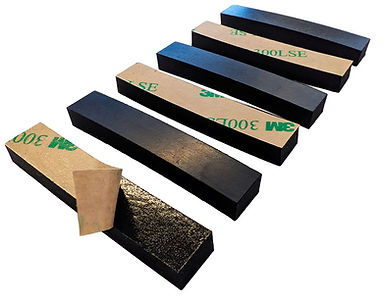
Where required, adhesive backing can be applied to materials using our tape lamination machines. This converts a plain sheet or cut part into a self-adhesive component, simplifying installation and eliminating the need for additional fixings or adhesives in the field. Adhesive-backed components are particularly common in sealing, gasketing, and anti-vibration applications. We can advise on adhesive selection to suit the base material and end-use conditions.
Datasheet Downloads
Download Link | Colour | Hardness (Shore A) | Specific Gravity | Tensile Strength (MPa) | Elongation at Break (%) | Compression Set (%) | Temperature Range (°C) |
|---|---|---|---|---|---|---|---|
Viton A (FKM) | Black | 75 | 2 | 4.9 | 200 | 45 (150°C/24hr) | -20 to +275 |
Viton B (FKM) | Black | 70 | 1.95 | 4.9 | 250 | 40 (150°C/24hr) | -30 to +300 |
EPDM 60sh | Black | 60 | 1.15 | 9.8 | 300 | 30 (70°C/24hr) | -30 to +130 |
Butyl (IIR) | Black | 65 | 1.2 | 8.8 | 350 | 40 (70°C/24hr) | -40 to +125 |
Hypalon (CSM) | Black | 65 | 1.4 | 9.8 | 350 | 40 (70°C/24hr) | -30 to +180 |
EPDM (WRAS) | Black | 70 | 1.13 | 10.8 | 320 | 20 (70°C/24hr) | -40 to +120 |
EPDM/SBR Blend 50sh | Black | 50 | 1.45 | 3.9 | 200 | 50 (70°C/24hr) | -30 to +90 |
EPDM (FDA/Metal Detectable) | Blue | 60 | 1.3 | 4.9 | 300 | 40 (70°C/24hr) | -25 to +140 |
EPDM (BS6014) 60sh | Black | 60 | 1.15 | 9.8 | 300 | 30 (70°C/24hr) | -30 to +130 |
EPDM (UL94 V-0 FR) | Black | 65 | 1.4 | 4.9 | 200 | 50 (70°C/24hr) | -30 to +130 |
High Friction Polymer (HFPM) | Multiple | N/A | 1.0–1.9 | N/A | N/A | N/A | Up to +50 |
Natural Rubber (NR) 40 | Black | 40 | 1.1 | 18.6 | 600 | 30 (70°C/24hr) | -20 to +70 |
Natural Rubber (NR) 50 | Black | 50 | 1.15 | 16.7 | 500 | 30 (70°C/24hr) | -20 to +70 |
Natural Rubber (NR) 60 | Black | 60 | 1.2 | 16.7 | 400 | 30 (70°C/24hr) | -20 to +70 |
Neoprene (CR) C40 | Black | 40 | 1.25 | 9 | 450 | 30 (70°C/24hr) | -30 to +120 |
Neoprene (CR) C50 | Black | 50 | 1.35 | 12.1 | 400 | 30 (70°C/24hr) | -30 to +120 |
Neoprene (CR) C60 | Black | 60 | 1.4 | 13 | 250 | 25 (70°C/24hr) | -30 to +120 |
Neoprene (CR) C70 | Black | 70 | 1.4 | 13 | 200 | 25 (70°C/24hr) | -30 to +120 |
Neoprene (CR) C80 | Black | 80 | 1.5 | 13 | 100 | 25 (70°C/24hr) | -30 to +120 |
Neoprene (UL94 V-0 FR) | Black | 65 | 1.6 | 4.9 | 200 | 50 (70°C/24hr) | -30 to +130 |
Nitrile (NBR) BA40 | Black | 40 | 1.1 | 7 | 600 | 30 (70°C/24hr) | -30 to +120 |
Nitrile (NBR) BA50 | Black | 50 | 1.15 | 7.5 | 450 | 25 (70°C/24hr) | -30 to +120 |
Nitrile (NBR) BA60 | Black | 60 | 1.2 | 8.5 | 400 | 20 (70°C/24hr) | -25 to +120 |
Nitrile (NBR) BA70 | Black | 70 | 1.2 | 12.5 | 250 | 20 (70°C/24hr) | -20 to +120 |
Nitrile (NBR) BA80 | Black | 80 | 1.25 | 12.5 | 150 | 20 (70°C/24hr) | -20 to +110 |
PVC (FR) | Clear | N/A | 1.25 | 20.1 | 275 | N/A | N/A |
Flexible PVC | Black | 77 | 1.22 | N/A | 300 | N/A | -15 to +50 |
Silicone (GP20) | Multiple | 20 | N/A | 10.1 | 979 | 23 (150°C/24hr) | -60 to +230 |
Silicone (GP30) | Multiple | 30 | N/A | 8 | 500 | 23 (150°C/24hr) | -60 to +230 |
Silicone (GP40) | Multiple | 40 | N/A | 9 | 525 | 25 (150°C/24hr) | -60 to +230 |
Silicone (GP50) | Multiple | 50 | N/A | 9 | 450 | 15 (150°C/24hr) | -60 to +230 |
Silicone (GP60) | Multiple | 60 | N/A | 10 | 400 | 13 (150°C/24hr) | -60 to +230 |
Silicone (GP70) | Multiple | 70 | N/A | 10 | 320 | 9 (150°C/24hr) | -60 to +230 |
Silicone (GP80) | Multiple | 80 | N/A | 7 | 215 | 18 (150°C/24hr) | -60 to +230 |
Silicone Bisco HT-6240 (Clear) | Transparent | 40 | N/A | 6.9 | 450 | 30 (149°C/70hr) | -62 to +218 |